
TATORT HAUT – Unter Verdacht BPDCN

Special Case Unit – BPDCN

BPDCN ist eine seltene, aggressive Krebserkrankung und erst seit 2016 unter diesem Namen bekannt.1,2 Trotz charakteristischer Marker ist die Diagnose dieser seltenen Erkrankung oft wie eine Detektivarbeit. Aufgrund des heterogenen Erscheinungsbilds der BPDCN in der Klinik3–5 führt erst ihr pathologischer Fingerabdruck zur Lösung und damit zur gesicherten Diagnose.

Deshalb ist für die Ermittlung der Diagnose genaues Hinschauen und Hinterfragen so wichtig – es braucht Krankheitsversteher! Und die Aufmerksamkeit aller!

ZEIT IST DER ENTSCHEIDENDE FAKTOR

Die Seltenheit der BPDCN und Ähnlichkeit zu anderen hämatologischen und dermatologischen Neoplasien stellt eine große Herausforderung für die Diagnose der BPDCN dar.3,4,6,7

Die Verzögerung der Diagnose kann einen negativen Einfluss auf die Prognose haben, da die BPDCN ohnehin eine klinisch sehr aggressive Erkrankung ist.2,6,8,9

Der Austausch zwischen Hausärzten, Dermatologen, Laborarbeitern, Pathologen, Referenzpathologien und Hämato-Onkologen spielt eine wesentliche Rolle bei der korrekten und rechtzeitigen Diagnose von BPDCN.

DAS INDIZIEN-BOARD

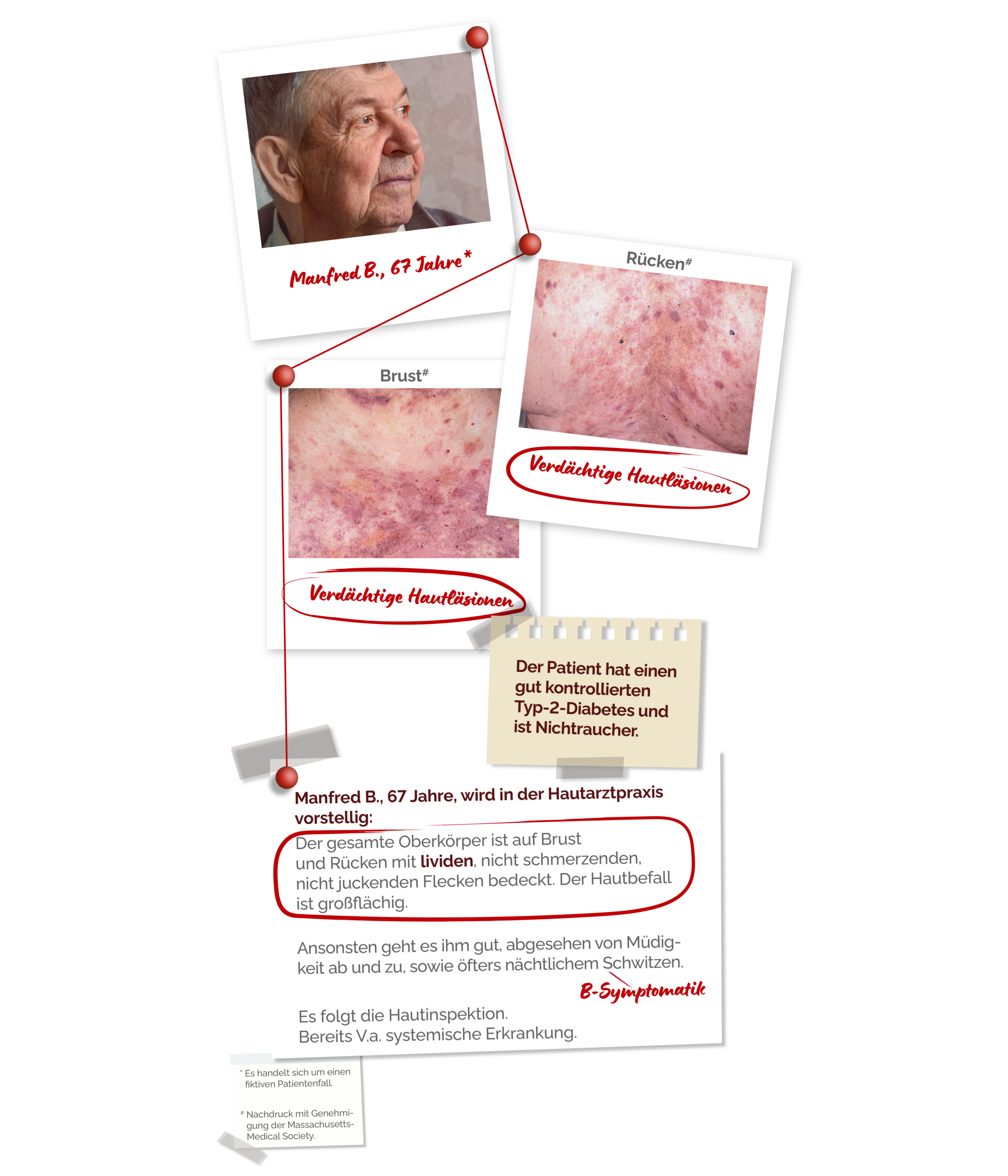
DER PATIENT STELLT SICH VOR

DER PATIENT STELLT SICH VOR DER PATIENT STELLT SICH VOR

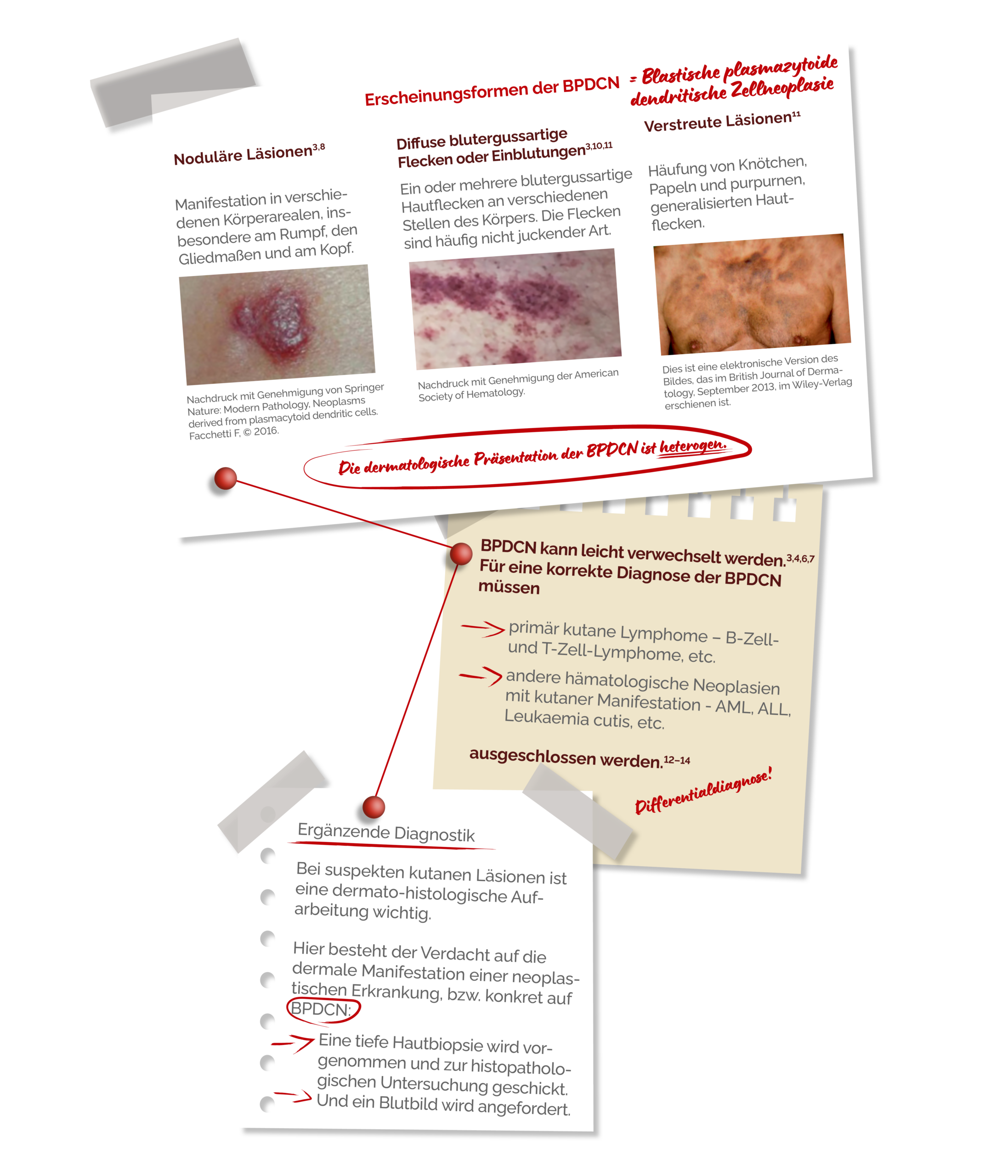
FRÜHERKENNUNG UND BLICKDIAGNOSE
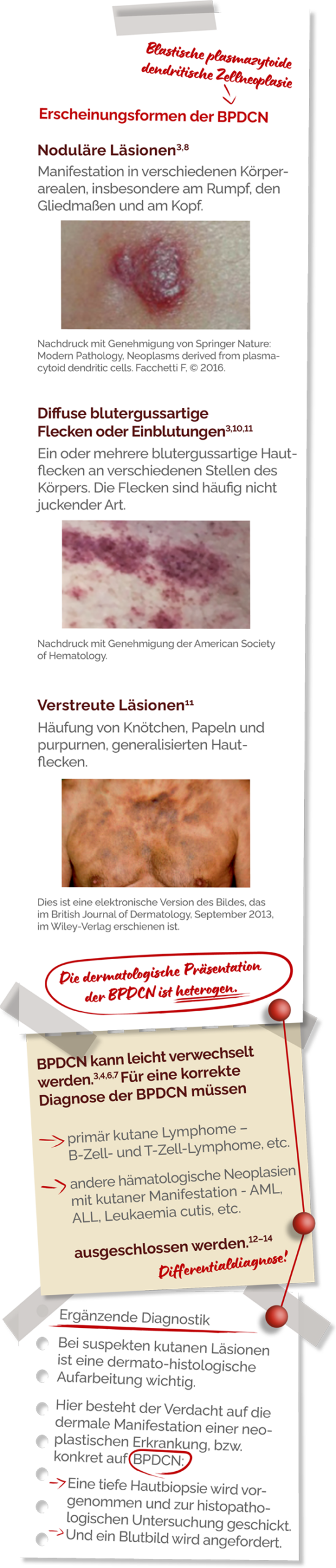
FRÜHERKENNUNG UND BLICKDIAGNOSE FRÜHERKENNUNG UND BLICKDIAGNOSE

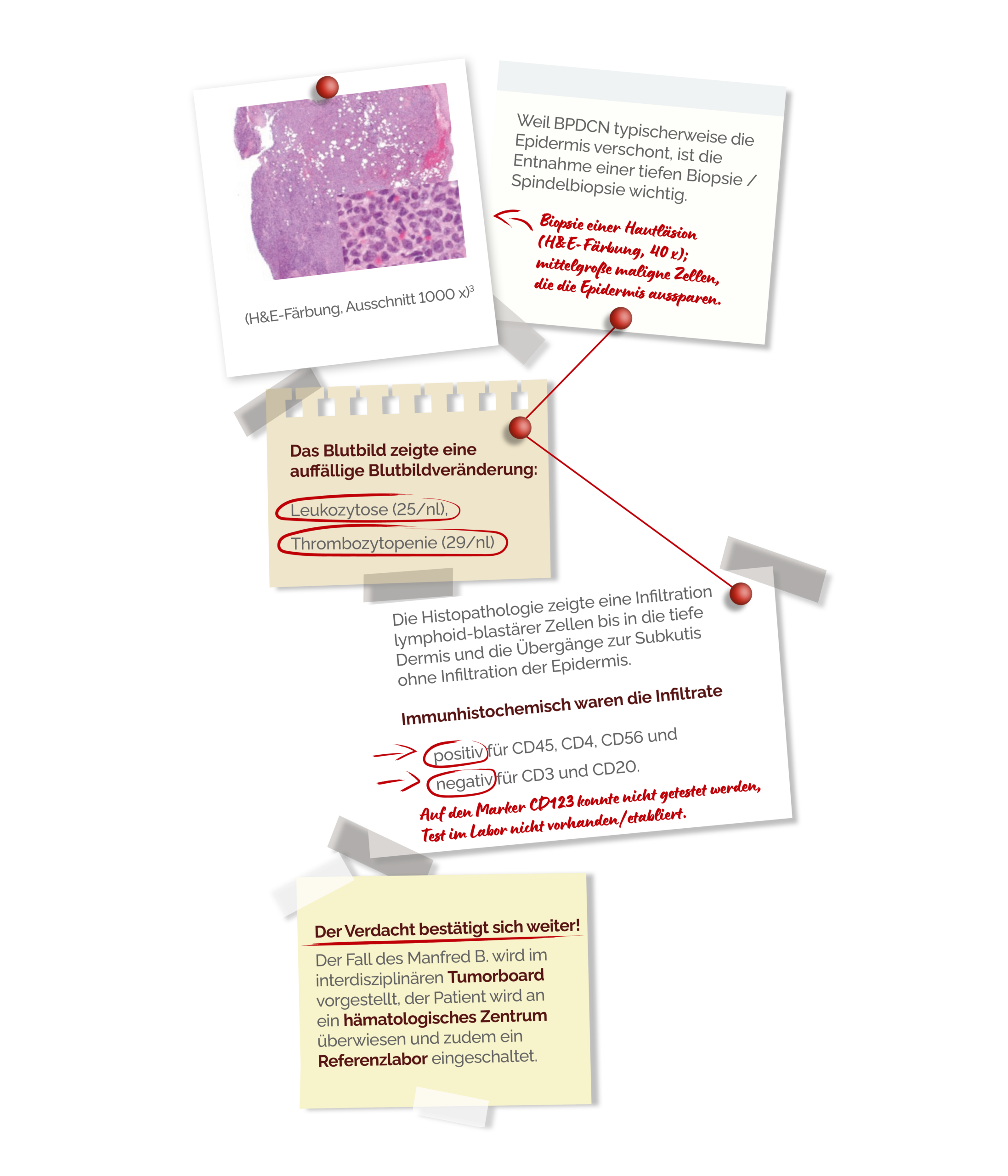
HISTOPATHOLOGIE & ERSTES BLUTBILD

HISTOPATHOLOGIE & ERSTES BLUTBILD HISTOPATHOLOGIE & ERSTES BLUTBILD

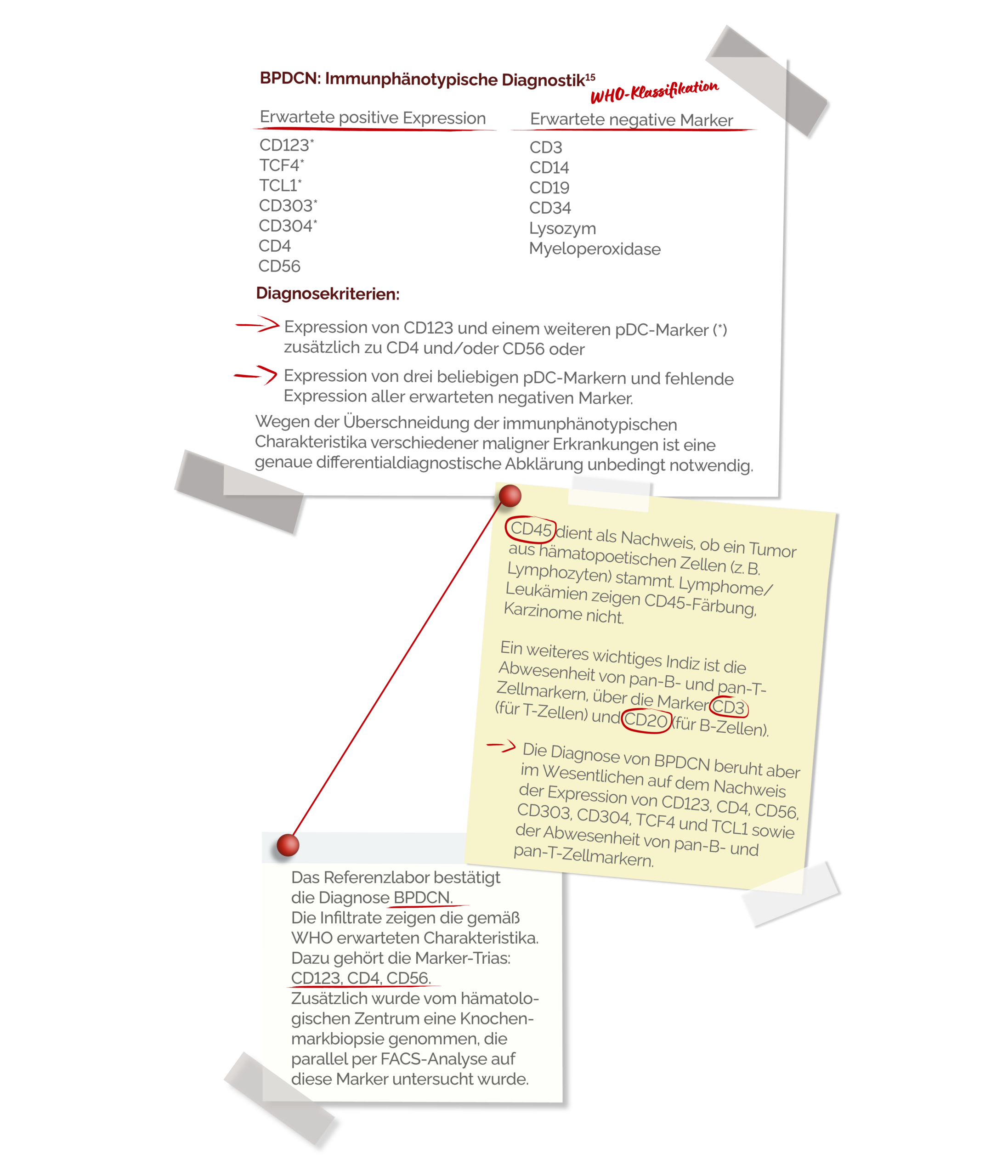
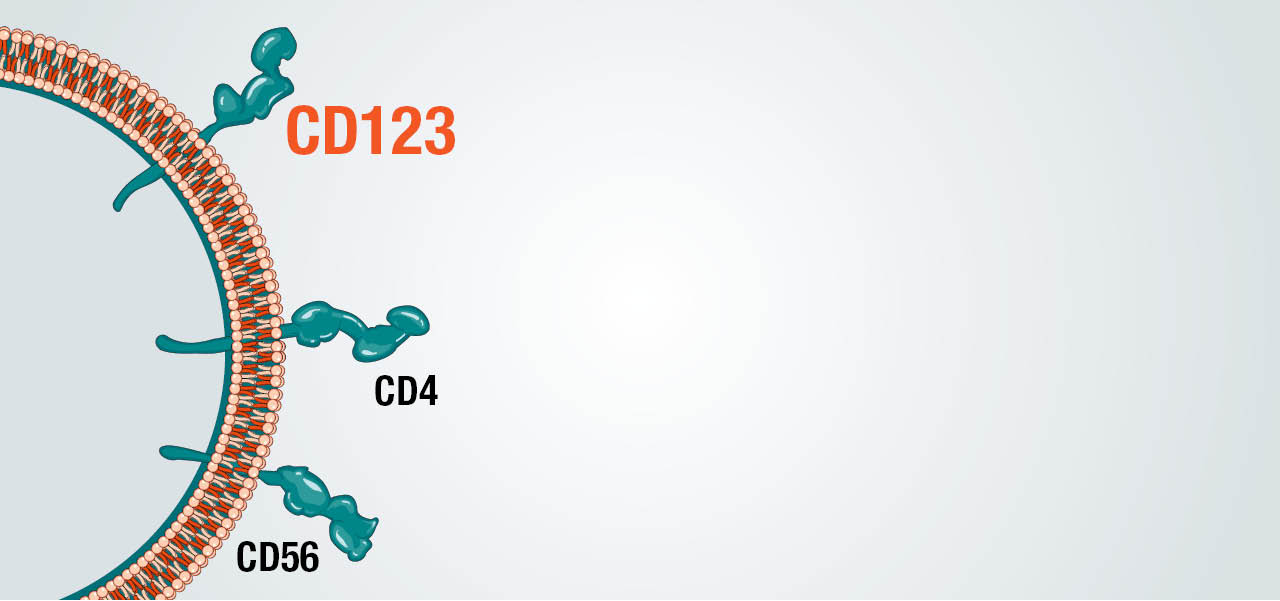
REFERENZLABOR UND DIAGNOSE
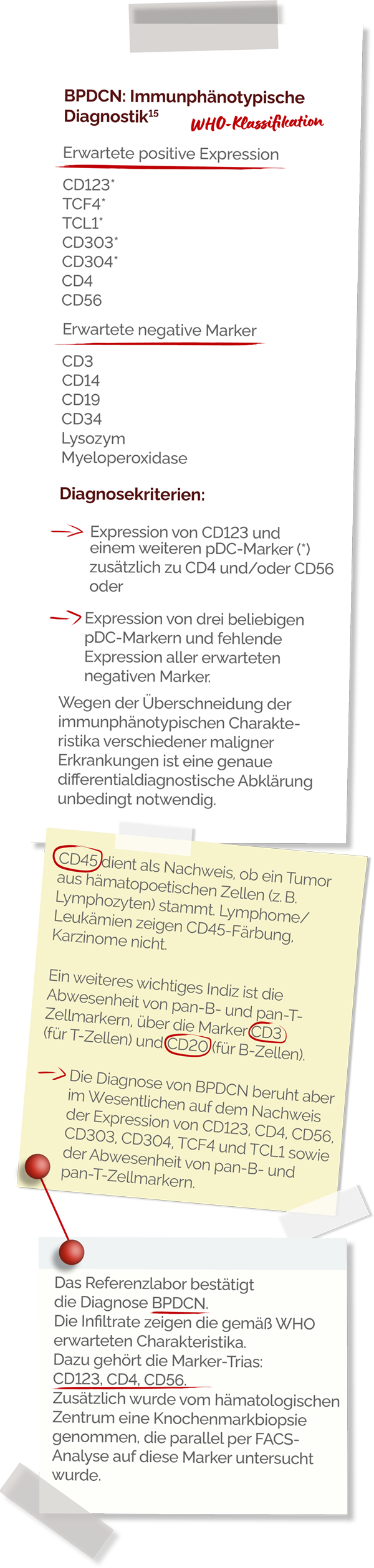
REFERENZLABOR UND DIAGNOSE REFERENZLABOR UND DIAGNOSE

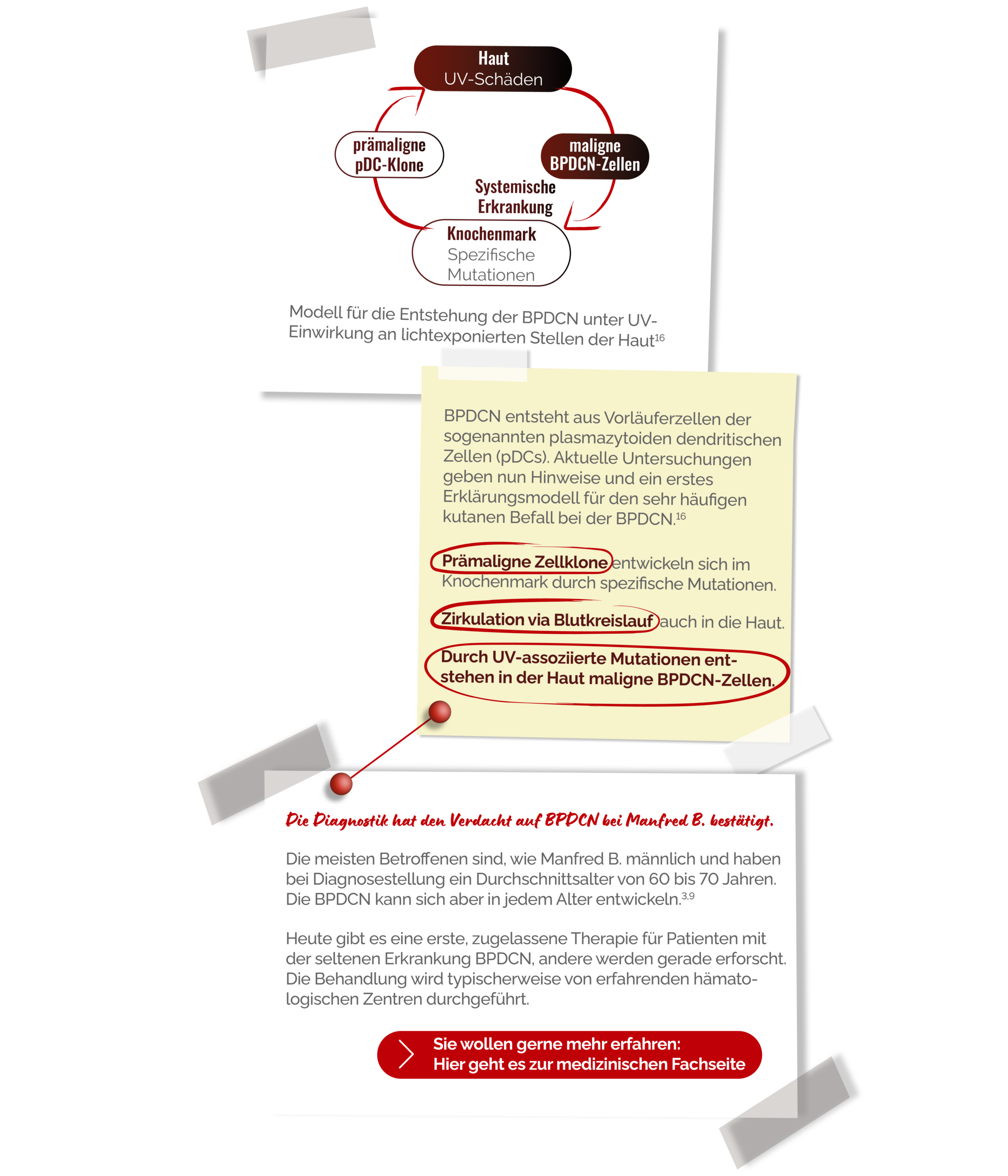
WAS KÖNNTE PASSIERT SEIN?
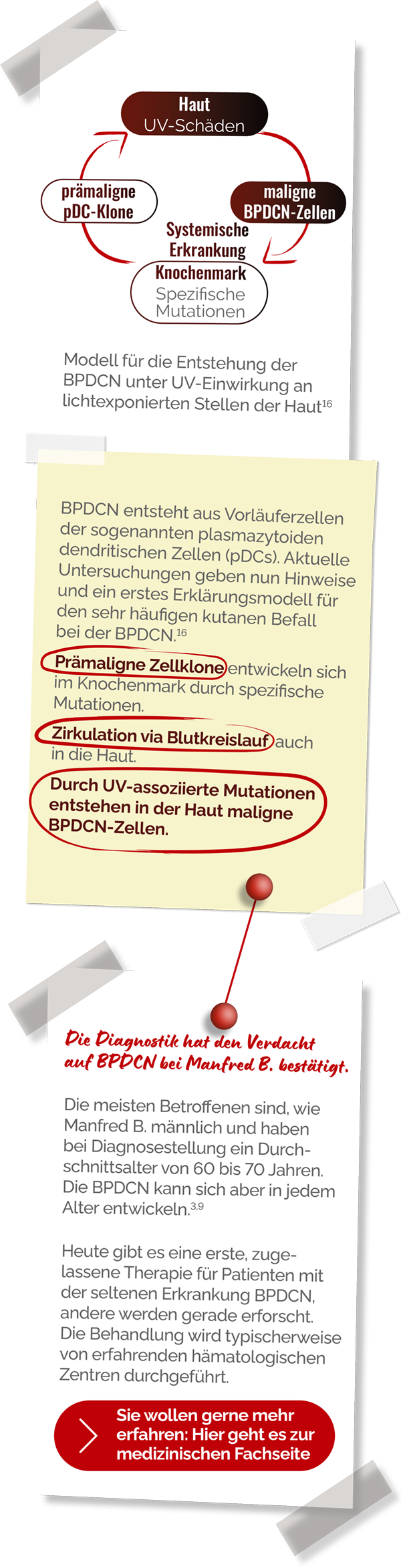
1/5
Literatur
  1. Willemze R et al. WHO-EORTC classification for cutaneous lymphomas. Blood. 2005;105(10):3768–3785.
  2. Facchetti F et al. Blastic plasmacytoid dendritic cell neoplasm. In: Swerdlow SH et al., eds. WHO Classification of Tumours. Pathology and Genetics of Tumours of Haematopoietic and Lymphoid Tissues. 4th ed. Lyon, France: IARC Press; 2008:145–147.
  3. Riaz W et al. Blastic plasmacytoid dendritic cell neoplasm: update on molecular biology, diagnosis, and therapy. Cancer Control. 2014;21(4):279–289.
  4. Pagano L et al. Blastic plasmacytoid dendritic cell neoplasm: diagnostic criteria and therapeutical approaches. Br J Haematol. 2016;174(2):188–202.
  5. Martín-Martín L et al. Blastic plasmacytoid dendritic cell neoplasm frequently shows occult central nervous system involvement at diagnosis and benefits from intrathecal therapy. Oncotarget. 2016;7(9):10174–10181.
  6. Laribi K et al. Blastic Plasmacytoid Dendritic Cell Neoplasm: From Origin of the Cell to Targeted Therapies. Biol Blood Marrow Transplant. 2016;22(8):1357–1367. doi:10.1016/j.bbmt.2016.03.022.
  7. Goyal A et al. Blastic Plasmacytoid Dendritic Cell Neoplasm. In: Carter JB et al., eds. Atlas of Cutaneous Lymphomas: Classification and Differential Diagnosis. Cham, Switzerland: Springer International; 2015:193–203.
  8. Pagano L et al. Blastic plasmacytoid dendritic cell neoplasm with leukemic presentation: an Italian multicenter study. Haematologica. 2013;98(2):239–246.
  9. Pemmaraju N. Novel pathways and potential therapeutic strategies for Blastic Plasmacytoid Dendritic Cell Neoplasm (BPDCN): CD123 and beyond. Curr Hematol Malig Rep. 2017;12(6):510–512.
  10. Sullivan JM, Rizzieri DA. Treatment of blastic plasmacytoid dendritic cell neoplasm. Hematology Am Soc Hematol Educ Program. 2016;2016(1):16–23.
  11. Julia F et al. Blastic plasmacytoid dendritic cell neoplasm: clinical features in 90 patients. Br J Dermatol. 2013;169(3):579–586.
  12. Wobser W. Forum Sanitas – Das informative Medizinmagazin. 2021. 3. Ausgabe.
  13. Parsi M et al. Leukemia Cutis. In: StatPearls [Internet]. Treasure Island (FL): StatPearls Publishing; 2021. Available from: https://www.ncbi.nlm.nih.gov/books/NBK541136/
  14. Hammond D, Pemmaraju N. Tagraxofusp for Blastic Plasmacytoid Dendritic Cell Neoplasm. Hematol Oncol Clin North Am. 2020;34(3):565–574.
  15. Reichard KK. Blastic plasmacytoid dendritic cell neoplasm: how do you distinguish it from acute myeloid leukemia? Surg Pathol Clin. 2013;6(4):743–765.
  16. Griffin GK et al. Ultraviolet radiation shapes dendritic cell leukaemia transformation in the skin. Nature. 2023;618:834–841. doi:10.1038/s41586-023-06156-8.
  1. Facchetti F et al. Blastic plasmacytoid dendritic cell neoplasm. In: Swerdlow SH et al., eds. WHO Classification of Tumours. Pathology and Genetics of Tumours of Haematopoietic and Lymphoid Tissues. 4th ed. Lyon, France: IARC Press; 2008:145–147.
  2. Goyal A et al. Blastic Plasmacytoid Dendritic Cell Neoplasm. In: Carter JB et al., eds. Atlas of Cutaneous Lymphomas: Classification and Differential Diagnosis. Cham, Switzerland: Springer International; 2015:193–203.
  3. Griffin GK et al. Ultraviolet radiation shapes dendritic cell leukaemia transformation in the skin. Nature. 2023;618:834–841.
  4. Julia F et al. Blastic plasmacytoid dendritic cell neoplasm: clinical features in 90 patients. Br J Dermatol. 2013;169(3):579–586.
  5. Laribi K et al. Blastic Plasmacytoid Dendritic Cell Neoplasm: From Origin of the Cell to Targeted Therapies. Biol Blood Marrow Transplant. 2016;22(8):1357–1367.
  6. Pagano L et al. Blastic plasmacytoid dendritic cell neoplasm with leukemic presentation: an Italian multicenter study. Haematologica. 2013;98(2):239–246.